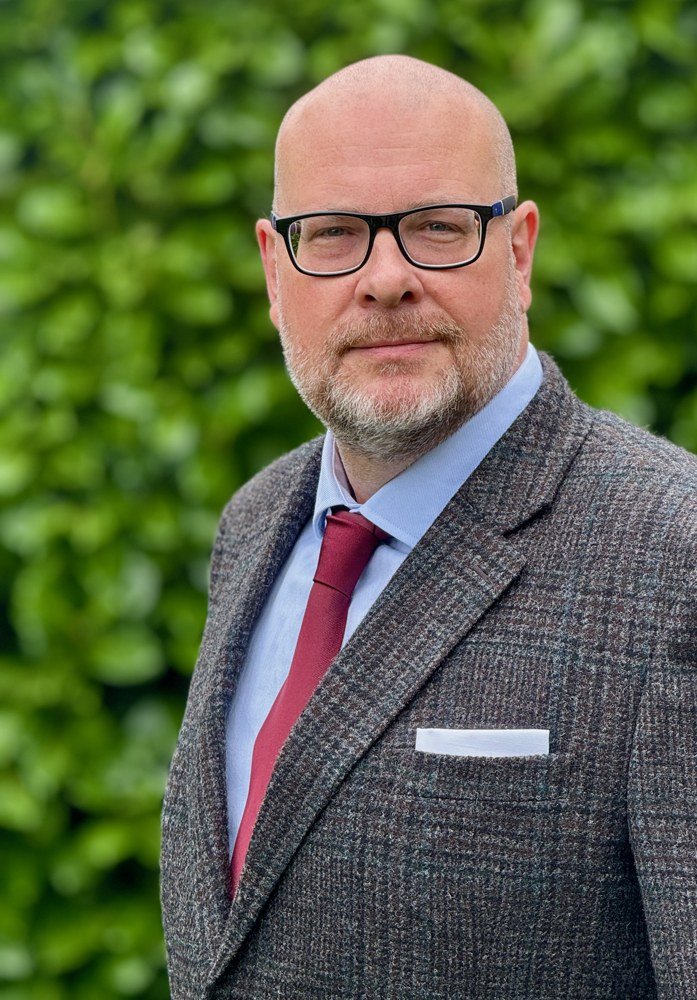
Simon Kensington-Fellows is an SEO consultant with more than 20 years’ experience across local, ecommerce, national and international SEO. His work focuses on helping businesses improve their visibility in search, with a clear understanding of what that visibility needs to achieve.
Two decades in searchCommercial focusSearch & AI visibility
01 / Expertise
Experience across the search landscape.
01
Local SEO
My local SEO work centres on the connection between a business, the people it serves and the places in which it operates. I consider how a business is found and understood across local search, with attention to the quality and relevance of the opportunities that visibility creates.
02
Ecommerce SEO
For ecommerce businesses, search visibility needs to connect with the way people discover, compare and choose products. My approach considers the commercial role of organic search within the wider business, keeping attention on customers and their decisions alongside the performance of the website.
03
National SEO
Working at a national level means understanding a wider market without losing sight of what makes the business relevant to its customers. I bring strategic judgement to competing priorities, helping keep search activity aligned with the organisation’s offering, capacity and commercial goals.
04
International SEO
International work brings different markets and customer expectations into the picture. My experience spans SEO beyond a single national market, with an approach that respects context rather than assuming that the same priorities will apply everywhere. The business and its audience remain the starting point.
02 / Experience
An independent practice. A broader perspective.
Current
Independent consultancy
Be VisAIble is my principal SEO and AI-visibility consultancy brand, operating through Kensington Consulting Group Limited. It brings together my established search experience and my interest in how businesses become understood and selected through AI systems.
2018 — 31 August 2026 · now contracting
SeedHub Media / OnlySEO
I co-founded SeedHub Media in 2018 and was an owner-operator until my exit on 31 August 2026. I now have a contracting relationship with SeedHub Media / OnlySEO, separate from my former ownership and operational role.
Before 2018
Freelance SEO consultant
Before co-founding SeedHub Media, I worked independently as a freelance SEO consultant. That work forms part of more than two decades of experience across local, ecommerce, national and international SEO.
03 / Principles
Good SEO starts with good judgement.
The principles behind my work, from local search to AI visibility.
01
Start with a commercial purpose.
I believe SEO should begin with a clear understanding of what the business needs to achieve. Visibility has value when it creates the right opportunities: people finding a relevant business, understanding its offer and feeling able to take the next step. More traffic can be useful, but volume alone is an incomplete measure of progress. I want the purpose of the work to remain clear, so that decisions can be judged against something more meaningful than a rising number on a report.
02
Understand the business. Respect the customer.
Every business operates within its own circumstances. Its customers, market, reputation and capacity all influence what worthwhile progress looks like. I do not assume that an approach that suits one organisation will suit another. Understanding how people make decisions is just as important as understanding how they search. Good advice needs to account for both. It should reflect what the business can genuinely offer and what its customers need to know, with priorities that make sense in the context of that relationship.
03
Let evidence inform the judgement.
I value evidence, but I also care about what it can and cannot tell us. A competitor doing something successfully does not establish that a particular visible activity caused the success. Observations can raise useful questions without providing complete answers. My approach is to remain curious, question assumptions and distinguish what is established from what is plausible or still uncertain. Professional judgement includes being willing to revise a view when the evidence changes. Confidence should come from careful reasoning, not from making complicated or changing systems sound more predictable than they are.
04
Make clarity and credibility count.
People should be able to understand what a business does, who it serves and why it may be a suitable choice. I see clarity as part of the substance of SEO. Useful information, accurate claims and a coherent identity help people make informed decisions. Credibility is stronger when the account a business gives of itself is consistent with the experience and evidence around it. The aim is to communicate something real and relevant, in language that helps the person reading it.
05
Build for lasting value.
There will always be another trend, tool or urgent recommendation competing for attention. I prefer to consider whether a proposed change addresses a meaningful need and deserves the time it will take. Sound foundations and proportionate priorities give a business room to make progress without confusing activity with achievement. That does not mean avoiding change. It means being deliberate about it, keeping the wider objective in view and recognising that worthwhile work should continue to make sense beyond the next report.
06
Stay curious as discovery changes.
AI is changing how people explore questions, compare options and find businesses. I see that as a reason to extend my thinking while retaining the principles that make search work useful: relevance, credibility and commercial purpose. New possibilities deserve investigation, alongside an honest account of what remains uncertain. My interest is in helping businesses be understood and considered as discovery evolves, without treating every new development as a reason to abandon sound judgement.
04 / Looking ahead
The Preferred Answer Method.
I’m the creator of the Preferred Answer Method (PAM), a methodology concerned with how businesses and other entities become understood and selected within AI-mediated discovery. It extends my interest in search visibility into the ways people increasingly use AI systems to find information and make decisions.
For me, this is a continuation of a wider professional question: how does a relevant business become a credible choice? PAM brings that question into the changing relationship between search, AI and the people using them. The method is in development, with the same emphasis on clear reasoning and commercial purpose that informs my SEO work.